Top 4 github.com Alternatives 2026
Managing source code across diverse version control systems or scaling to meet enterprise security standards creates friction for engineering teams. Most hosted Git platforms drop SVN, Perforce, or Mercurial support, and require extra contracts for self-hosting, advanced permissions, or direct cloud integration. This comparison covers pricing, migration help, on-premise deployment, and multi-VCS support so you can choose a platform that actually fits your organization’s compliance and workflow needs.
Table of Contents
Tornado API

At a Glance
The vendor advertises a 99.9998% extraction success rate and zero egress fees, backed by contractual SLAs for enterprise media ingestion. Built by Velys Software, Tornado API targets teams that need predictable, large-scale video and podcast extraction delivered straight into cloud storage.
Core Features
- Direct cloud delivery to S3, Azure, GCS, R2, and Alibaba OSS so files land in your bucket with no intermediate servers.
- High extraction success with anti-restriction technology that aims to keep downloads alive despite platform defenses.
- Scalable throughput that runs from 100 videos per day up to multi-terabyte enterprise operations.
- Contractual SLAs with uptime guarantees tailored to plan tiers for operational predictability.
- Bulk support for YouTube video and Spotify podcast downloads with original-quality media and metadata.
Key Differentiator
That extraction figure above, combined with direct-to-cloud delivery and contractual SLAs, defines Tornado API’s core advantage for enterprise ingestion. The product is positioned so failures and re-runs are rare, which reduces wasted compute and pipeline retries during large ingest jobs.
Pros
-
High reliability. The product claims a near-perfect extraction record, which reduces downtime and the engineering time spent retrying blocked downloads.
-
Scales with your needs. From development proof of concept to multi-terabyte datasets, the infrastructure handles volume without a lengthy DIY build.
-
Direct cloud delivery lowers operational cost by removing transient servers and the egress surprises that come with proxy-based approaches.
-
Specialized anti-bot and anti-restriction technology keeps access stable when platforms tighten their defenses, which matters for continuous dataset refreshes.
-
Founder-level support and negotiable SLAs mean you can get responsiveness and contract terms suitable for production SLAs.
Cons
- Pricing is not listed publicly and requires qualification, which can delay initial evaluation and force an early sales conversation before testing at scale.
Who It's For
Large AI teams, media data operations, and companies building training or transcription pipelines that must ingest high volumes of video and audio reliably. If you need contractual uptime guarantees and direct delivery into cloud storage, this is the tool profile to evaluate.
Unique Value Proposition
Direct delivery to major cloud providers removes an entire class of operational overhead and recurring egress costs. Instead of managing proxies, headless browsers, and temporary storage, your pipeline receives canonical files in your bucket, which simplifies downstream processing and lowers per-terabyte total cost of ownership for dataset builds.
Real World Use Case
A machine learning team uses Tornado API to bulk download thousands of YouTube videos directly into their GCS bucket for transcription and model training. The service reduced blocked downloads and re-ingests during their dataset refresh, letting the engineers focus on annotation and model iterations rather than extraction reliability.
Pricing
Plans start from $1,200 per month for basic tiers. Enterprise solutions and higher-throughput plans are customized after a qualification call where bandwidth, SLA terms, and delivery targets are agreed.
Website: https://tornadoapi.io
GitLab
At a Glance
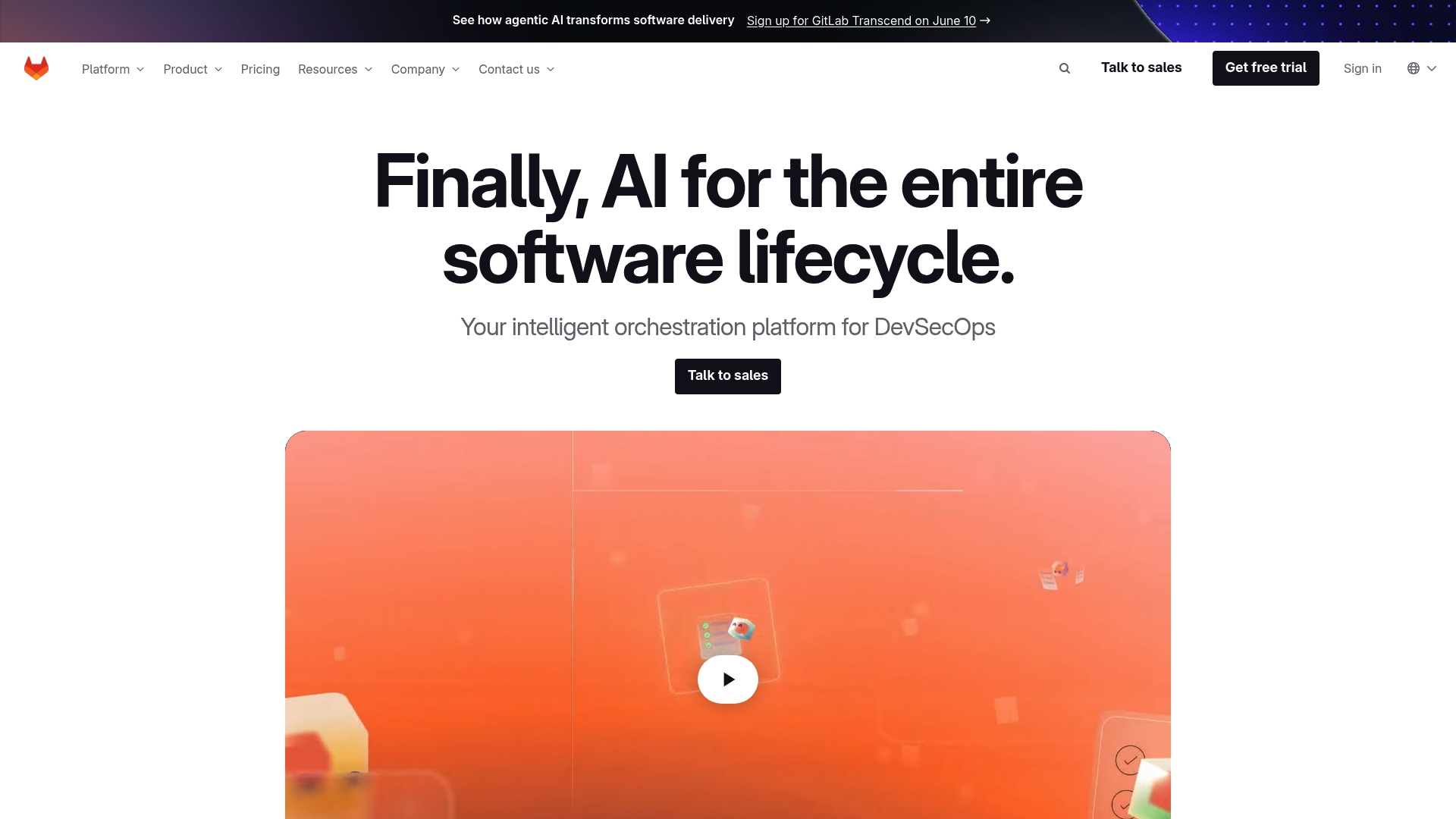
Combines source control, integrated CI/CD, security scanning, and project management into a single product aimed at self-hosted, compliance-sensitive environments. Teams that need on-premise control and auditability will find the platform deliberately opinionated about tracing and permissions.
Core Features
- Version control with Git: standard repo workflows, merge requests, and branch protection rules for teams.
- Integrated CI/CD pipelines: pipeline-as-code, runners for on-prem or cloud execution, and pipeline artifacts built into the project view.
- Code review and collaboration tools: merge request approval rules, inline discussions, and MR templates that centralize reviews.
- Self-hosting support: installable instances for environments with strict security or regulatory needs.
- Permissions and access controls: project and group level roles to limit who can push, merge, and release.
Key Differentiator
GitLab tries to collapse the entire development lifecycle into one product so teams avoid stitching multiple tools. For organizations that must host their own infrastructure and keep CI/CD close to code, that single-pane approach reduces operational sprawl and simplifies audit trails.
Pros
- Integrated CI/CD and pipelines work well and reduce handoffs between build systems and source control, which speeds delivery for teams that invest in pipeline templates.
- Centralized code review and collaboration features keep discussions next to the code, lowering context switching for reviewers and maintainers.
- Self-hosting ability supports security-sensitive deployments by keeping data inside an organization’s network and aligning with internal compliance work.
- Extensive documentation and an active community make troubleshooting faster than with obscure, closed-source tools.
- Serves as a single source of truth for projects, code, and releases, which simplifies reporting and change history for auditors.
Cons
- The interface can lag or feel sluggish with very large merge requests, which interrupts review flow for monorepo teams.
- Newcomers face a steep learning curve because the UI surfaces many controls and concepts at once.
- Some bugs and operational issues require deep troubleshooting knowledge of runners, registries, or the underlying database.
- SSO and identity management features work but leave room for wider enterprise SAML and external auth coverage.
When It May Not Fit
If you need a lightweight hosted Git service with minimal administration, GitLab’s self-hosted and feature-rich model will feel heavy. If your team prefers best-of-breed point solutions for each stage, GitLab’s all-in-one approach may limit flexibility.
Who It's For
Development teams, DevOps engineers, and security professionals who must run source control and pipelines inside their own network. Especially relevant for organizations with compliance needs in industries like finance or aerospace.
Real World Use Case
A financial institution deploys self-hosted GitLab instances to keep source and CI inside its network. The security team uses group level policies and audit logs while developers run reproducible pipelines that produce signed artifacts for release.
Website: https://gitlab.com
Assembla
At a Glance
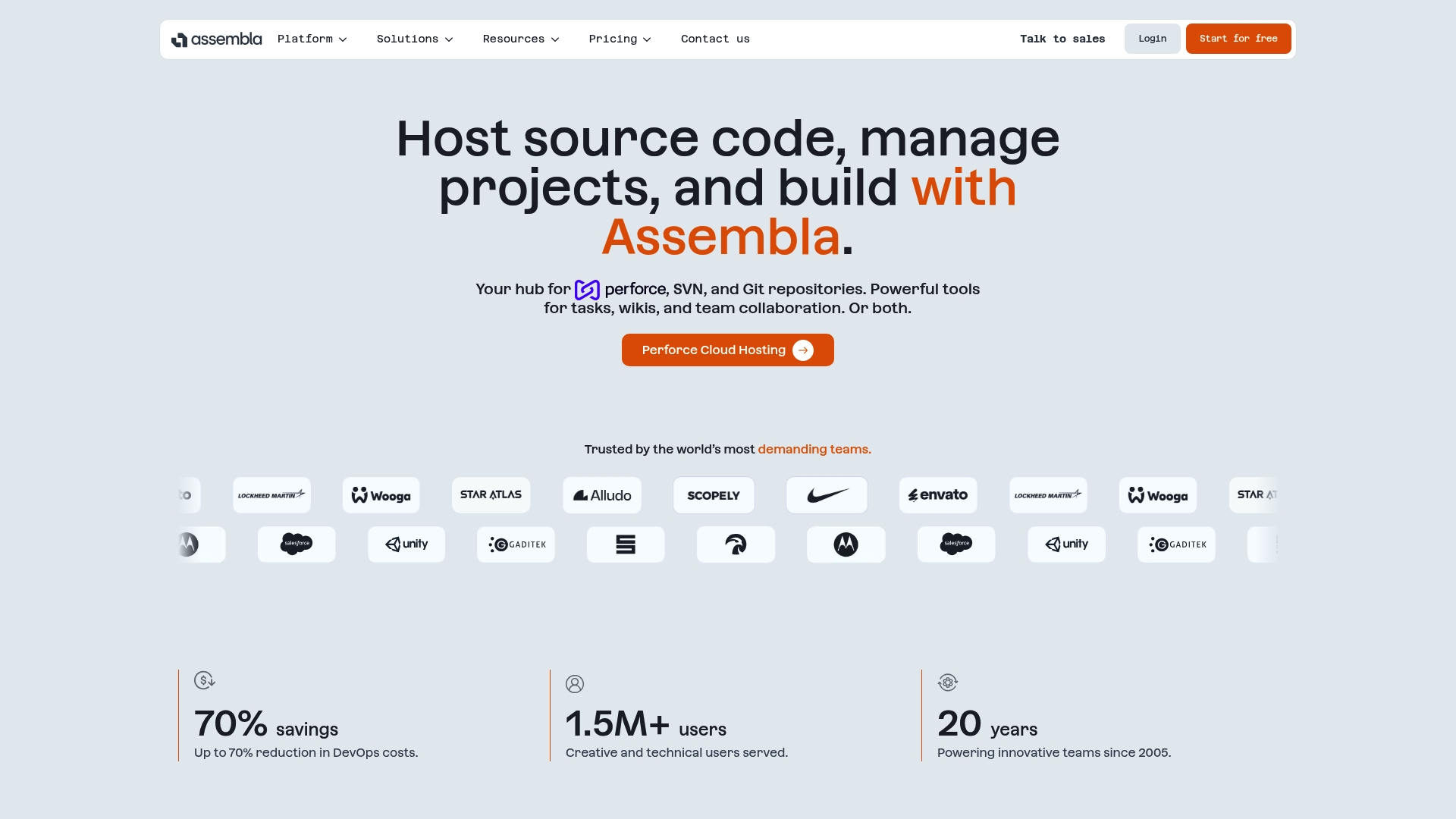
Assembla hosts Git, SVN, and Perforce repositories under a single account, a capability that matters when a shop runs mixed version control across legacy and modern projects. The vendor advertises enterprise-grade security including SOC 2 and GDPR compliance alongside managed cloud and self-hosted options.
Core Features
-
Unified source control with Git, SVN, and Perforce support so teams can centralize monorepos and legacy Perforce lines without separate tooling.
-
Built-in code review, inline comments, merge requests, and multi-reviewer approvals to keep pull workflows and audit trails together.
-
Integrated project management: sprint planning, task boards, milestones, and ticket workflows for cross-team coordination.
-
Enterprise controls: AES-256 encryption at rest, two-factor authentication, SSO, plus managed cloud hosting or self-hosting for private environments.
Key Differentiator
Assembla’s single biggest distinction is the combination of multi-VCS support with enterprise controls and integrated PM tools. If you need Perforce for large binary assets, SVN for certain legacy builds, and Git for new services, Assembla lets you run all three from the same operational plane while keeping security policies consistent.
Pros
-
Centralizing multiple VCS formats reduces migration friction. You can keep legacy SVN and Perforce histories live while developing new modules in Git.
-
The review and approval workflow supports multiple reviewers and inline comments, which shortens review cycles for distributed teams.
-
Built-in sprint and ticket features reduce email noise and make cross-time zone handoffs visible in the same place as code.
-
Offers both managed cloud hosting and self-hosting. That flexibility lets security-sensitive teams keep repositories on-premises without losing project tooling.
Cons
-
Search and settings management can feel complex; some teams report a steeper administrative overhead than simpler hosted Git services.
-
Mobile productivity is not emphasized, so triaging issues from a phone is less efficient compared with mobile-first tools.
-
Choosing between managed hosting and self-hosting requires ops work. Self-hosted setups add maintenance responsibilities and cost.
When It May Not Fit
If your team expects an ultra-simple hosted Git experience with minimal configuration, Assembla’s enterprise features will feel heavyweight. Similarly, small teams that require strong mobile workflows or an out-of-the-box lightweight UI will likely prefer simpler Git hosting options.
Notable Integrations
-
Slack for commit and ticket notifications.
-
Jira for issue synchronization and cross-system linking.
-
Common CI/CD tools for pipeline triggers and build status reporting.
Who It's For
Development teams and engineering managers who must support mixed version control environments and need enterprise security controls. Particularly useful for organizations migrating legacy Perforce or SVN projects while keeping modern Git services in place.
Real World Use Case
A global engineering organization uses Assembla to host Perforce assets for game art, SVN for long-lived libraries, and Git for microservices. Teams plan sprints and track tickets in the same workspace, reducing context switching and lowering DevOps coordination costs.
Pricing
Assembla’s standard plans start at $5.99 per user per month, with custom enterprise pricing available for larger deployments. The vendor advertises seasonal promotions such as up to 25% off during Black Friday events.
Website: https://assembla.com
RhodeCode
At a Glance
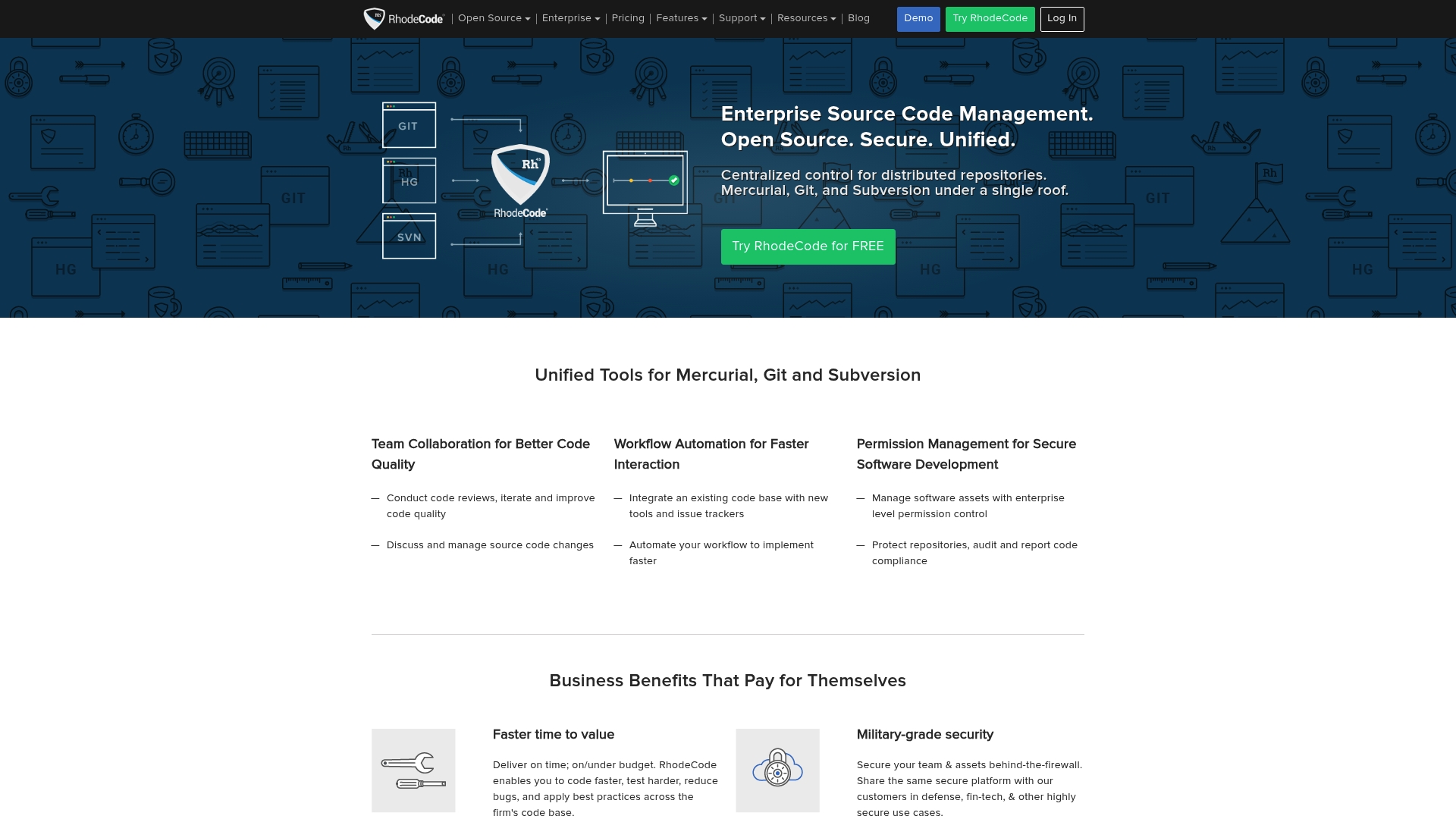
One management plane for Git, Subversion, and Mercurial, plus a free open source Community Edition and a paid Enterprise tier for scale. RhodeCode advertises multi-instance deployments and features aimed at large organizations with mixed VCS estates.
Core Features
- Unified repository management across Git, SVN, and Mercurial, so teams do not need separate hosts for each VCS.
- Code review with inline comments and workflow automation that integrates with CI/CD pipelines.
- Enterprise permission controls and authentication for granular access management.
- Support for SCM migration and multi-node or multi-location instances to centralize dispersed repositories.
- Full-text code search, artifacts management, and online file editing for quick discovery and small fixes.
Key Differentiator
RhodeCode’s primary claim is a single administrative surface for three major VCS families while offering an open source edition. That combination lets organizations consolidate tooling and keep private deployments under IT control rather than stitch together separate Git, SVN, and Mercurial systems.
Pros
- Consolidation lowers operational complexity. Managing users, permissions, and audits from one place reduces repetitive admin work across different VCS servers.
- Enterprise access controls work at scale. The product exposes fine-grained permissions that enterprise security teams expect for regulated codebases.
- Migration support shortens cutover time. Built-in assistance for moving from SVN to Git or folding multiple hosts into one instance eases large consolidations.
- The Community Edition removes licensing friction for internal trials and small teams, letting engineers validate workflows before paying for Enterprise support.
- Multi-instance capability supports geo distributed deployments for organizations with compliance or latency requirements.
Cons
- Independent third-party reviews are scarce, which makes it harder to benchmark real-world reliability and admin experience.
- Public feedback on operational edge cases and large-scale upgrades is limited, so some risk remains for novel deployment patterns.
- Enterprise pricing is volume-based and requires contacting sales for exact quotes, which slows rapid procurement for some teams.
When It May Not Fit
If you rely on a broad ecosystem of marketplace apps and community plugins, RhodeCode’s smaller public footprint means fewer off-the-shelf integrations are visible. Teams that need large independent case studies for procurement may find the limited external reviews a procurement hurdle.
Who It's For
Large development organizations that must centralize heterogeneous source control systems behind strong permissioning and private deployment. Security, compliance, and multi-location repository control matter more than having a large third-party marketplace.
Real World Use Case
A multinational engineering organization consolidates scattered Git, SVN, and Mercurial servers into a single RhodeCode deployment. Security policies and code review gates are enforced centrally while regional nodes keep latency low and comply with local data rules.
Pricing
The Community Edition is free. RhodeCode Enterprise is listed at $75 per user per year. Cloud hosting is advertised starting at $8 per user per month with additional enterprise features and volume pricing available through sales.
Website: https://rhodecode.com
Comparative Analysis of Extraction Tools
In the video and audio extraction tool landscape, each product reviewed presents unique strengths tailored to distinct operational needs. The following analysis examines core differentiations based on the primary reader’s interests, emphasizing reliable cloud-based engineering solutions.
Extraction Performance and Direct Deployment
Tornado API excels in extraction success and offers direct delivery to cloud storage, making it uniquely suited for teams requiring integration into existing workflows. This tool's anti-restriction technologies and dedicated SLAs advance consistent large-scale operations. By contrast, an alternative like Assembla caters more toward multi-repository hosting across various version control systems, which supports development teams managing heterogeneous codebases. For pure media ingestion tasks, Tornado API's specialized focus streamlines operations effectively.
Detailed Security and Compliance Features
For organizations prioritizing stringent security standards, GitLab and RhodeCode provide enterprise-level access and operational logging, key aspects for regulated industries. These features enable precise user management and accountability. Developers managing repository operations and media ingestion would find Tornado API competitive in overall simplicity, though it does not prioritize these security measures to the same detailed extent as the aforementioned competitors.
Best Fit for Key Scenarios
- Tornado API is ideal for teams needing high-throughput video ingestion coupled with direct-to-cloud integration.
- GitLab suits developers seeking a consolidated development lifecycle platform that integrates version control and CI/CD pipelines.
- Assembla addresses scenarios where teams operate mixed-version control workflows, benefitting from an integrated platform without extensive migration.
- RhodeCode suits installations requiring unified management across Git, Mercurial, and SVN repositories, especially for multi-location enterprises.
Our Pick
Based on reliability, integration capabilities, and reduced operational costs via direct media-to-cloud delivery, Tornado API emerges as the recommended choice for collaborative AI, media processing, and large-scale extraction requirements. However, for those seeking tools incorporating stringent enterprise-specific repository security features or requiring multi-version control hosting, alternatives like GitLab, Assembla, or RhodeCode demonstrate unique advantages worth evaluating for those respective contexts.
Video Extraction and Source Control Alternatives
For teams managing source control, video extraction, or mixed operational needs, here is a comparative analysis of leading solutions with a focus on key differentiators and target audiences.
| Product | Core Feature Set | Key Differentiator | Best For | Pricing | Notable Limitation |
|---|---|---|---|---|---|
| Tornado API | Direct-to-cloud video ingestion, bulk podcast/downloading | High scalability and near-perfect extraction rates | AI teams building data pipelines | Starting $1,200/month | Pricing requires early qualification calls |
| GitLab | Integrated version control with CI/CD and project management | Unified environment for all development cycles | Self-hosted, compliance-critical software projects | Not disclosed | Learning curve for new users |
| Assembla | Supports Git, SVN, and Perforce under one system | Centralizes mixed-version control with project tools | Enterprises handling legacy and modern VCS | From $5.99/user/month | Mobile experience less emphasized |
| RhodeCode | Unified management for Git, SVN, and Mercurial | Open-source community edition with enterprise options | Large organizations ensuring central repository control | From $75/user/year | Limited community integrations and external reviews |
Discover Reliable Extraction Solutions Beyond GitHub
The article highlights challenges teams face when searching for github.com alternatives that offer stability, control, and integrated tools. If your projects involve gathering vast amounts of video or podcast data for AI training or transcription, managing source control alone is not enough. Tornadoapi solves extraction headaches with direct cloud delivery, anti-bot handling, and SLA-backed reliability you can count on.
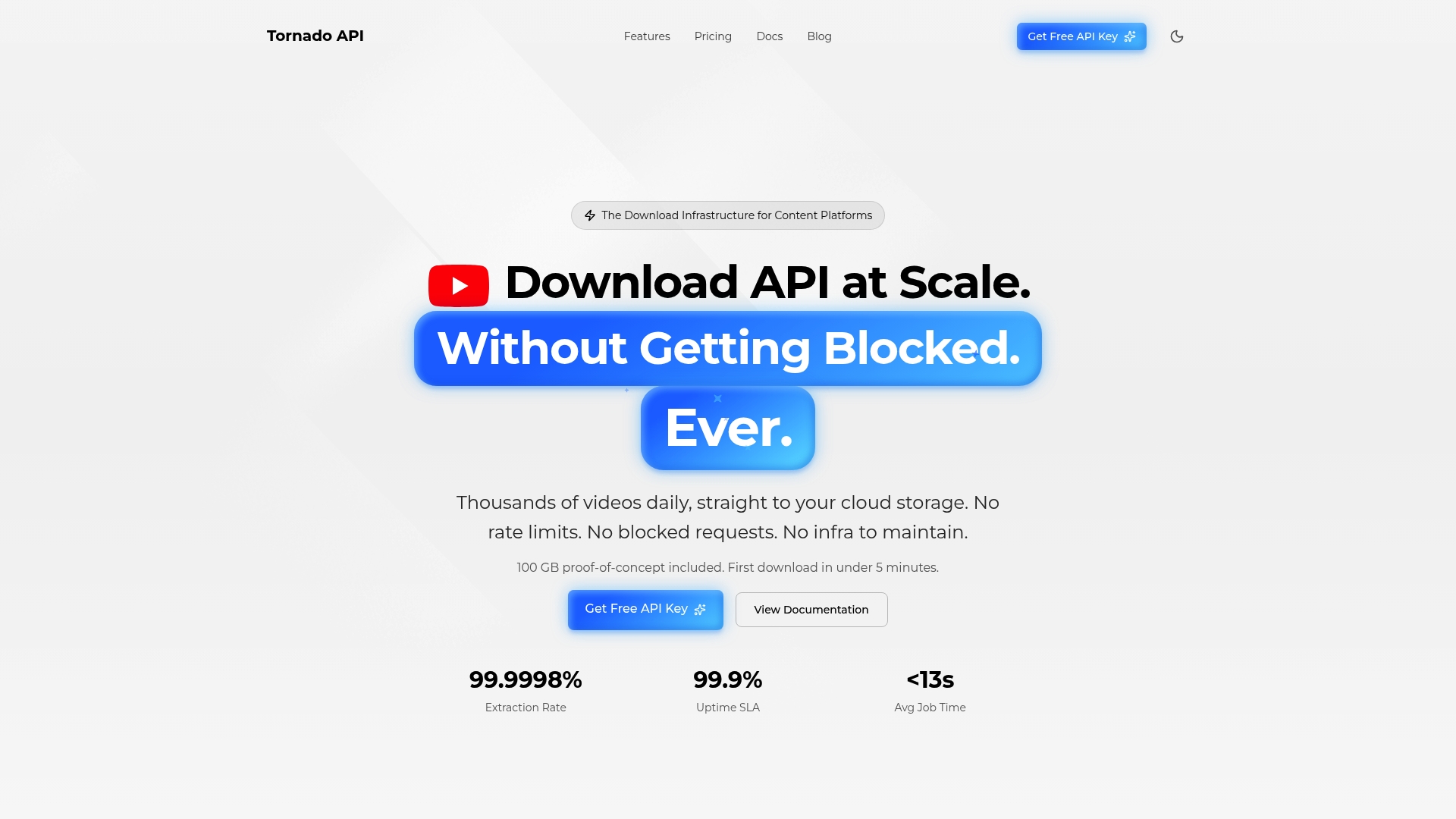
Stop struggling with unreliable downloads or complex proxy setups. Visit Tornadoapi to explore how our API connects seamlessly to YouTube, Spotify, and more, delivering media directly to your S3, Azure, or GCS bucket. Book a 30-minute infrastructure chat at https://tornadoapi.io and take control of your dataset ingestion without guesswork.
Frequently Asked Questions
How does Tornadoapi ensure high extraction success rates for video content?
Tornadoapi boasts a 99.9998% extraction success rate, which is supported by its anti-restriction technology designed to maintain reliable downloads despite platform defenses. This high success rate significantly reduces downtime and minimizes engineering efforts on retries, allowing teams to focus on more valuable tasks.
What is the difference between Tornadoapi and GitLab for managing media ingestion?
GitLab excels in combining source control with CI/CD tools for self-hosted environments, making it a strong choice for teams needing detailed project management features. In contrast, Tornadoapi specializes in large-scale video and podcast extraction into cloud storage, focusing on high reliability and direct delivery, which is pivotal for teams prioritizing media ingestion at scale.
Can I use Tornadoapi to download podcast episodes in bulk?
Yes, Tornadoapi supports bulk downloads of podcasts, including high-quality media and metadata, directly into cloud storage solutions like S3 and GCS. This functionality is particularly beneficial for teams building transcription pipelines or training models that require large datasets of audio content.
How does Tornadoapi's pricing structure work for enterprise solutions?
Tornadoapi's plans begin at $1,200 per month for basic tiers, with customized enterprise solutions developed through a qualification call to discuss bandwidth and SLA terms. This pricing allows organizations to tailor solutions to their specific media ingestion needs.
What advantages does Tornadoapi have over traditional media downloading methods?
Tornadoapi offers direct cloud delivery to major platforms, eliminating intermediate servers and egress fees associated with proxy-based methods. This efficiency simplifies the ingestion process and reduces ongoing operational costs, making it a preferable choice for extensive media data operations.